When planning a shared bathroom, many homeowners ask, “what are the benefits of double sink vanities?” The answer extends beyond appearance. Two basins can reduce morning congestion, especially when partners or children prepare at the same time. One person can brush teeth while another washes or styles hair. Small changes matter.
A double sink vanity also creates separate storage zones. Each user may have a drawer for toiletries, towels, or grooming tools. This arrangement can make a busy bathroom feel calmer. It may also improve resale appeal when buyers value practical family features. In well-planned bathrooms, the countertop becomes easier to organize, with fewer bottles crowding one small area.
However, a larger vanity is not automatically the better choice. It needs sufficient wall length, comfortable clearance, and carefully planned plumbing. Installation costs can increase, particularly when new water lines or drains are required. Cleaning two basins also takes more time. That is easy to overlook.
Room measurements should guide the decision. Check door swings, walkway space, outlet positions, and cabinet depth before choosing a model. A professional installer can identify drainage limitations and confirm whether the existing layout can support the change. Homeowners should also consider daily habits, not only design trends. If one person rarely uses the bathroom, a double vanity may consume valuable space without adding much function. The best choice balances convenience, maintenance, budget, and long-term household needs. Sometimes, a single wide basin works better. It is less dramatic, perhaps, but often more efficient.
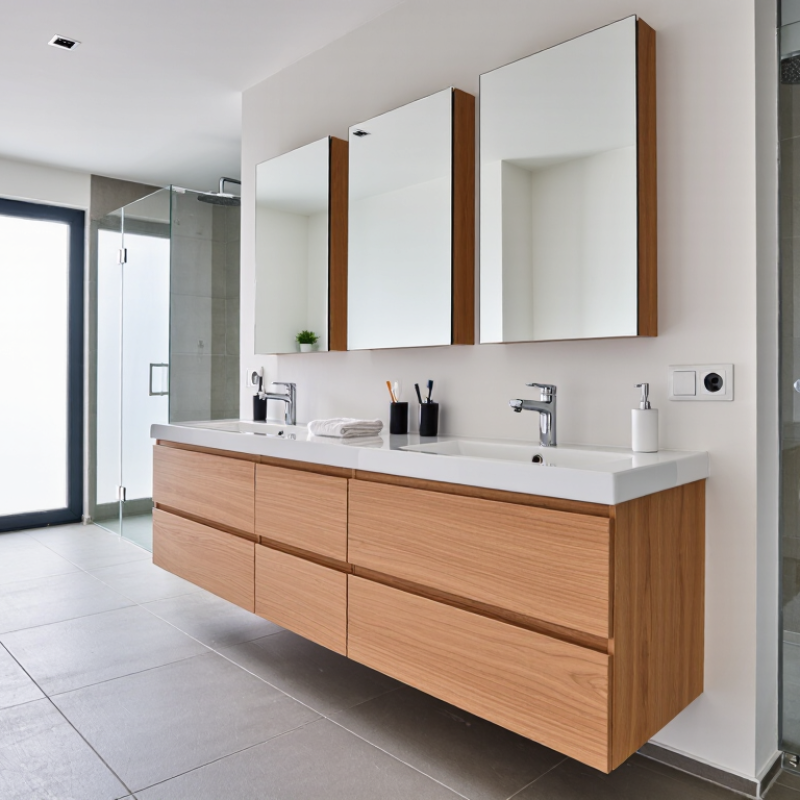
A double sink vanity is a bathroom cabinet or counter designed to hold two separate basins. Each sink usually has its own faucet and drain, giving two people space to wash or get ready at the same time. The basins may sit on one continuous countertop, or they may be built into separate sections. The cabinet below can provide drawers or doors for towels and toiletries, though plumbing often reduces usable storage.
The key feature is two functional sink areas, not simply a wide countertop. A vanity needs enough room between the basins and along the outer edges for comfortable use. It also needs suitable water lines and drains for both sinks. Check the room’s width, door clearance, and plumbing location before choosing a size. A unit that looks spacious in a showroom may feel crowded beside a swinging door. That detail is easy to miss.
Tips: Measure the wall and walkways, then mark both basin positions with tape. Consider who will use the sinks and where daily items will go. Two basins can reduce waiting, but they also take up counter and cabinet space. If storage matters more than simultaneous use, one larger basin may work better.
Two sinks can make a shared bathroom feel less like a queue. One person can brush their teeth while another washes up, without repeatedly moving a toothbrush cup or reaching across a wet counter. That matters. In a household with overlapping work or school schedules, separate basins give each person a small, predictable space.
Houzz’s 2024 U.S. Bathroom Trends Study reported that 54% of homeowners replacing a vanity chose a double-sink design, showing how common this feature is in remodels. The figure describes surveyed renovation choices, not proof that two sinks suit every household.
The layout still needs careful planning. Measure the vanity, leave usable counter space, and check that cabinet storage will not disappear beneath extra plumbing. Two faucets also create more surfaces to wipe, and simultaneous use can make a narrow bathroom feel crowded. A double vanity works best when two people genuinely share the room at the same time; otherwise, one wider basin may offer more counter room. It is an easy detail to overvalue in a showroom. At home, the distance between the sinks, mirror lighting, and a clear place for everyday items may matter just as much.
A double sink vanity can make a shared bathroom feel less crowded, but its storage benefits depend on the layout. Separate cabinets give each person a place for daily items, such as a hairbrush, shaving kit, or skincare products. This can keep the countertop clearer during busy mornings. Drawers beneath each basin also make small items easier to find than deep, mixed cabinets. Small change. A divided drawer can prevent toothpaste and hair ties from becoming one untidy pile.
Storage may be more useful when the vanity includes a mix of drawer sizes and open space. Shallow top drawers suit combs and everyday essentials, while deeper drawers can hold towels or a hair dryer. If plumbing blocks the center of a cabinet, pull-out bins can make that awkward area easier to use. Still, two sinks do not automatically mean twice the storage. A wide basin layout can leave less room for cabinets, so check the interior dimensions before choosing. Measure carefully.
Tips: Keep one drawer or basket for each person, and use a small tray for shared items. Store products you rarely use elsewhere; otherwise, even a spacious vanity can feel cluttered. Check that drawer fronts clear the plumbing and that cabinet doors open without hitting nearby fixtures.
A double-sink vanity can make a shared bathroom feel less crowded during busy mornings. Two people can brush their teeth or get ready without taking turns at one basin. Separate faucets also help keep daily items, such as a shaving kit and hairbrush, on different sides of the counter.
The trade-off is space. A wider vanity may leave too little room for a door to open fully or for someone to pass comfortably. Measure the room, including door swings and walking paths, before choosing a layout. Leave enough clear counter space beside each basin for soap and everyday essentials. Space still wins. In a compact bathroom, one well-sized sink and better storage may work more comfortably.
Layout can shape a buyer’s first impression, especially in a primary bathroom used by two people. A second sink may appeal to households that value shared routines, but it does not guarantee a higher resale price. Buyers also notice practical details: drawers that open fully, lighting over both basins, and enough space to stand without bumping elbows. Keep plumbing access and cleaning needs in mind, too. More fixtures mean more surfaces to wipe and more fittings to maintain. A double vanity can support resale appeal when the room still feels open, orderly, and easy to use.
A double sink vanity is useful only when both people can use it comfortably. Measure the wall, door swing, and walkway before choosing a width. The National Kitchen & Bath Association’s Bathroom Planning Guidelines are a useful reference for clearances, but check your room in person. Two basins need elbow room, not just matching faucets. Measure twice.
Compare basin spacing, counter depth, and storage together. A shallow drawer may collide with the trap; a deep countertop can narrow the walking route. Stand where you would brush your teeth. Can someone pass behind you? Also check whether each sink has a nearby outlet, towel hook, and mirror lighting. Small details matter. They are easy to miss on a showroom plan.
Water use deserves a place in the decision. The U.S. EPA’s WaterSense program says labeled bathroom faucets use at least 20 percent less water than standard models while meeting performance requirements. That can help offset the extra daily use of a second sink. Choose faucet flow and basin shape together; a high-flow faucet can splash in a shallow bowl. A double vanity may still feel cramped if storage or counter space is sacrificed for symmetry. That trade-off is worth reconsidering.
| Factor | What to Consider | Potential Benefit | Planning Note |
|---|---|---|---|
| Shared morning and evening routines | Two sinks provide separate washing areas for people using the bathroom at the same time. | Can reduce waiting and make busy household routines more convenient. | Leave enough usable counter space around each basin so both users can comfortably access toiletries. |
| Personal storage and organization | Many designs pair each sink with its own drawers or cabinet area. | Separate storage can help keep personal items organized and reduce countertop clutter. | Check the interior layout; sink bowls and plumbing can limit the space available inside the cabinet. |
| Vanity width | Double sink vanities are commonly available in widths around 60 to 72 inches, though sizes vary by design. | A wider vanity can provide room for two basins and shared counter space. | Measure the room, doorways, and clearances. Confirm the product’s actual dimensions before purchase. |
| Sink spacing | The distance between basins affects elbow room, faucet placement, and counter usability. | Well-spaced sinks make it easier for two people to use the vanity together. | Review the basin and faucet positions on the specification drawing rather than relying on overall width alone. |
| Plumbing and installation | A second basin generally requires additional drain and water-supply connections. | A suitable existing layout may make installation more straightforward. | New or relocated plumbing can add labor and material costs. Have a qualified professional assess the layout. |
| Countertop and cleaning | Two sinks create more fixtures and faucet surfaces to maintain. | A continuous countertop can still offer a convenient shared surface between and around the basins. | Choose finishes and basin shapes that suit your cleaning preferences, and plan for regular care around faucets and drains. |
| Bathroom floor space | A wider vanity may reduce open floor area, especially in a compact bathroom. | In a spacious room, a double vanity can support two-user convenience without crowding the layout. | Check clearance in front of the vanity and make sure doors, drawers, and nearby fixtures can open comfortably. |
| Household needs and budget | Consider how often two people need the sinks simultaneously and the total cost of the vanity, countertop, faucets, and installation. | A double sink can be worthwhile when shared use is frequent and the room can accommodate it. | If simultaneous use is uncommon or space is limited, a single sink with more counter or storage space may be a better fit. |
Two people can brush their teeth or wash up at the same time. Less waiting.
No. A single, wider basin may offer more counter space when people rarely use the bathroom together.
Check the wall width, door swing, and walking space. Make sure people can pass behind someone using a sink.
Leave enough room for elbows and daily items. Matching faucets look neat, but comfort matters more.
Yes. Extra plumbing can take space beneath the basins, and shallow drawers may bump into the pipes.
Check mirror lighting, nearby outlets, towel hooks, and a clear spot for toothbrushes. Small details matter.
They can, especially with frequent use. Water-efficient faucets may help, but daily habits still matter.
Compare basin spacing, counter depth, and walkway width together. I might overvalue symmetry; at home, a little more counter space can be better.
What are the benefits of double sink vanities? They provide two separate basins, making shared bathroom routines more convenient by allowing two people to get ready at the same time. This can reduce waiting during busy mornings and give each person a clearer personal space. Depending on the design, a double sink vanity may also offer drawers, cabinets, or countertop areas that help keep daily essentials organized and within reach.
A double sink vanity can become a central feature of a larger bathroom, but it needs enough room for comfortable movement and practical use. Before choosing one, consider the vanity’s width and depth, sink placement, storage needs, plumbing, and the available floor space. A well-planned design can improve everyday function and contribute to a bathroom that appeals to future buyers, while a poorly sized unit may make the room feel crowded.

Aqua Bathroom