Choosing the right height for a bathroom sink is essential for comfort and functionality. Many homeowners wonder, "what is the ideal height for a bathroom sink?" This question doesn't have a one-size-fits-all answer. It often depends on the users' needs and the space available.
Standard sink heights usually range from 28 to 34 inches. For adults, a height of around 32 inches is often recommended. However, if the bathroom is used primarily by children, a lower height may be necessary. On the other hand, taller individuals might find 34 inches more suitable. Reflecting on these varied needs can lead to better choices.
Additionally, it's important to consider your plumbing and cabinetry. Sometimes, existing structures limit your options. Don't overlook the importance of personal preference. Visiting showrooms or trying out different sinks can help determine what feels right. Ultimately, finding the right height requires balance between standards and personal comfort.
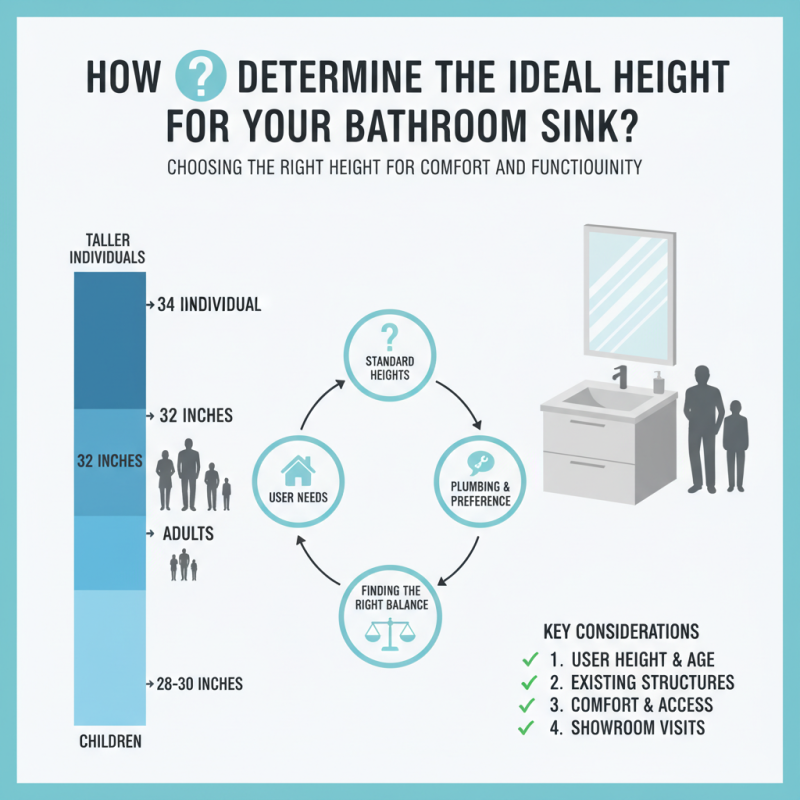
When selecting the ideal height for your bathroom sink, it's essential to consider common standards. Most homes have sinks ranging from 30 to 36 inches high. This height works well for adults, allowing for comfortable use. For children, however, a lower sink may be more suitable. Adjusting the height can help create a family-friendly space.
The American National Standards Institute (ANSI) suggests heights around 32 to 34 inches for sinks. This guidance stems from ergonomic studies showing what works best for users. An accessible sink height helps reduce strain on the back and arms. Many professionals recommend measuring from the floor to the top rim of the sink.
While standard heights offer a good starting point, not all spaces are alike. A taller person may prefer a slightly higher sink, while a shorter person might need one lower. Custom sinks can address unique needs but can also be a challenge to install correctly. It’s wise to involve a professional when making significant adjustments for better functionality. Prioritizing comfort and accessibility will enhance the overall experience in your bathroom.
| Height Category | Recommended Height (inches) | Suitable for |
|---|---|---|
| Standard | 30-32 | Most Adults |
| Child-friendly | 24-28 | Children |
| Tall Adults | 34-36 | Tall Adults & Accessibility Needs |
| Wall-mounted | 30-36 | Varies with User |
| Vanity Height | 31-34 | Modern Design |
When determining the height for your bathroom sink, several factors should be considered to ensure comfort and functionality. The average sink height typically falls between 30 and 36 inches. According to the National Kitchen and Bath Association, the recommended height for standard sinks is about 32 inches. This range is suitable for most adults. However, different users may require adjustments—children and individuals with disabilities often need lower sinks for accessibility.
Ergonomic considerations are crucial. A sink that is too high can cause strain on your back, while one that is too low can lead to discomfort when washing or grooming. Adjusting sink height to match the users’ height is a practical approach. For example, a person who stands 6 feet tall might feel more comfortable with a sink height closer to 36 inches. Conversely, a shorter user may prefer a height around 30 inches. A well-placed sink makes daily tasks easier and safer.
Material also plays a role in the overall experience. A heavier sink can feel more stable, but may require higher installation points. Soft materials such as ceramic can be more forgiving in height adjustments. However, with varying aesthetics and practicality, it's important to ensure the chosen design offers comfortable usability for everyone involved. Each bathroom is unique, and sometimes compromises must be made to find the ideal solution that meets everyone’s needs.
When measuring for your bathroom sink height, start with the user experience in mind. The average countertop height is about 32 to 36 inches. However, this varies depending on the users. For instance, if children often use the sink, a lower height may be needed for comfort and safety. A standard height may not suit everyone perfectly.
To measure accurately, have someone stand next to your intended sink location. Use a tape measure from the floor to their wrist. This height typically allows for a comfortable reach. Keep in mind that plumbing and design may alter your ideal measurement. Different sink styles can affect the overall height as well.
It’s also important to consider the cabinetry. The sink should align with the cabinet structure for a polished look. Don’t forget the faucet height too. Ideally, it should be easy to use without causing splashes. A well-planned height can greatly improve the functionality and aesthetics of your bathroom.
When determining the ideal height for your bathroom sink, it's vital to consider different user needs. Not everyone in a household is the same height. Therefore, ensuring comfort for all can significantly enhance the bathing experience.
For families with children, a lower sink height can be beneficial. It allows younger users to wash their hands easily. Conversely, taller adults might prefer a higher sink for convenience. Adjusting the sink height can accommodate varying preferences, making the space more functional.
Tips:
When choosing the right sink style for your bathroom layout, think about functionality and aesthetics. Different sink designs can transform the overall look of your space. For a small bathroom, a wall-mounted sink can save valuable floor space. These models create an open feel and are easier to clean. In contrast, a pedestal sink adds elegance but offers little storage.
Consider your bathroom's overall design. If your decor leans modern, a sleek undermount sink pairs well with smooth countertops. For a more traditional look, a vessel sink can serve as a stunning centerpiece. Materials also play a crucial role. Ceramic and glass are popular, but natural stone brings warmth and depth.
Reflect on the size and shape of your bathroom. If it’s compact, avoid bulky designs. A corner sink might be the solution. However, some may find it awkward. There’s also the risk of choosing a style that does not harmonize with your fixtures. Ultimately, the perfect sink enhances both design and usability. Don't rush this decision; take your time to ensure it complements your space.
: The average sink height is between 30 and 36 inches.
An incorrect height can cause back strain or discomfort while using the sink.
Adjusting the sink to match users’ heights enhances comfort for everyone involved.
A wall-mounted sink is ideal as it saves floor space and creates an open feel.
Yes, heavier sinks may require higher installations, while softer materials offer flexibility in height.
Your choice should balance functionality with aesthetics, matching the overall design of your space.
Avoid bulky designs and consider corner sinks, but be mindful of their awkwardness.
Harmonizing the sink with fixtures is essential for a cohesive look.
No, take your time to ensure the sink complements the overall bathroom design.
Sometimes, you must balance ideal design with practical usability for all users.
When considering what is the ideal height for a bathroom sink, it’s essential to understand standard height recommendations, which typically range from 30 to 36 inches. Factors such as the height of primary users, accessibility needs, and the overall bathroom layout play a critical role in determining the right sink height.
To measure for your bathroom sink height, start from the floor to the top of the sink, ensuring comfort and ergonomics for everyday use. If multiple users with different heights will use the sink, consider adjustable options or varying styles. Ultimately, the selected sink style should complement your bathroom's design while meeting practical height requirements to enhance the overall usability of the space.

Aqua Bathroom