A small bathroom can feel surprisingly open when its mirror is chosen with intention. This guide explores what mirror styles make bathrooms look bigger, using practical design principles rather than visual tricks alone. Shape, placement, frame depth, and reflected light all influence how spacious the room appears. A wide mirror can stretch a narrow wall, while a tall design can emphasize ceiling height. Frameless glass often creates the cleanest visual boundary.
Kerrie Kelly, FASID, an award-winning interior designer, has offered a useful perspective: “Mirrors are an easy way to add light, dimension, and personality to a space.” That idea matters in compact bathrooms. A mirror above a floating vanity can reflect floor area and make the room feel less crowded. Placing it opposite a window may also spread daylight across pale tile, though the result depends on the view. Reflected clutter will not help. That part is easy to overlook.
The following outline compares oversized, rounded, frameless, medicine cabinet, and backlit mirror styles. It also considers proportions, installation height, and practical storage needs. A huge mirror is not automatically better. It may expose messy countertops or create awkward glare near a bright fixture. I have found that the most convincing improvements come from matching the mirror to the room’s width and lighting. There is no universal winner. A narrow powder room may benefit from a horizontal mirror, while a low-ceilinged space may need a taller silhouette. Small details matter. Expect useful guidance, but leave room for judgment.
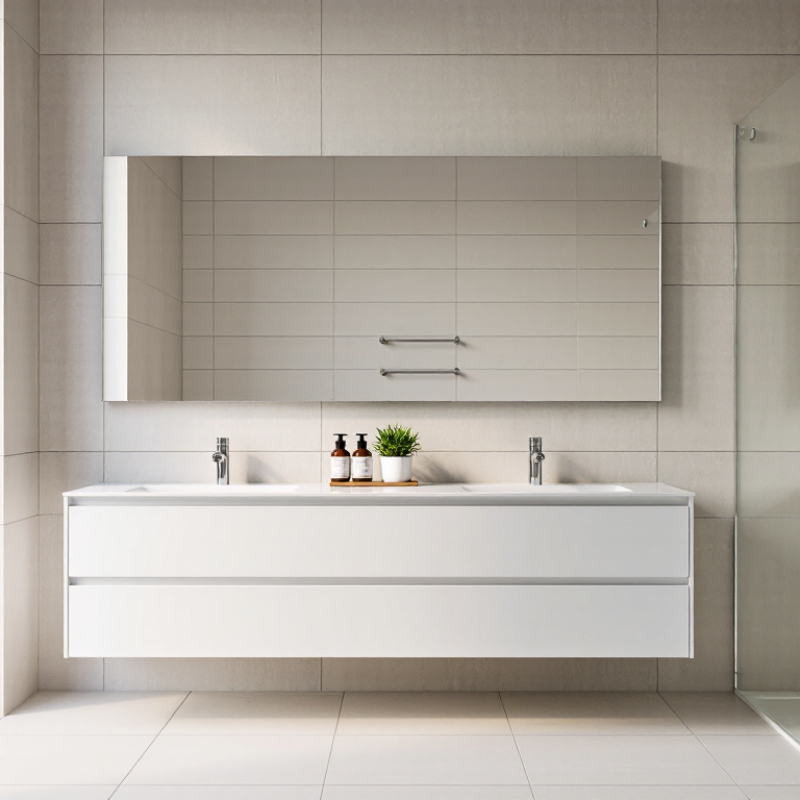
Top Mirror Styles That Make Bathrooms Look Bigger?
A mirror changes how a bathroom feels by controlling light, depth, and visual continuity. In bathroom planning, I often recommend a wide mirror above the vanity because it extends the room’s horizontal view. A wall-to-wall design can make narrow walls appear less restrictive. It also reflects tiles, lighting, and open floor space. The effect is strongest when the mirror sits opposite a window or a soft light source.
Frameless mirrors create fewer visual interruptions, so the wall appears cleaner and more spacious. Large rectangular mirrors suit compact bathrooms with straight lines, while tall mirrors can emphasize ceiling height. Rounded mirrors soften hard surfaces, but their curved shape may use wall space less efficiently. Placement matters more than shape. A mirror mounted too high can reflect only the ceiling, not the useful parts of the room.
A larger mirror is not always better. I have seen oversized designs reflect cluttered shelves, dark corners, or exposed plumbing. That can make the bathroom feel busier. Keep the reflected area intentional. Use even lighting around the mirror, and avoid placing it where glare dominates the room. Mirrored cabinet doors can add storage and depth, although their seams may interrupt the visual flow. The best design depends on the bathroom’s proportions, daylight, and daily use, not just its dimensions.
| Mirror Style | Typical Design Specification | Perceived-Space Impact | Why It Makes the Bathroom Look Bigger | Best Application | Important Design Considerations |
|---|---|---|---|---|---|
| Wall-to-Wall Mirror | Mirror width extends across most or all of the vanity wall; height commonly reaches from the backsplash area toward the ceiling. | Very High | It visually doubles the wall plane, reflects more of the room, and reduces the appearance of solid wall boundaries. | Small bathrooms, narrow powder rooms, and single-wall vanity layouts. | Use moisture-resistant installation materials and carefully seal edges near sinks, faucets, and wet areas. |
| Oversized Horizontal Mirror | Mirror is wider than a standard vanity mirror while maintaining a relatively low horizontal profile. | High | The wide reflection emphasizes the room’s horizontal dimension, making a compact bathroom feel broader. | Bathrooms with long vanities, double sinks, or limited side-to-side space. | Keep the mirror visually balanced with the vanity width; excessive overhang can make the wall look crowded. |
| Ceiling-Height Vertical Mirror | Tall rectangular mirror extending substantially upward from the vanity, often leaving only a narrow gap below the ceiling. | High | Vertical reflection draws the eye upward and increases the perceived height of the room. | Bathrooms with low ceilings, narrow floor plans, or tall wall storage. | Install at a practical viewing height and leave sufficient clearance for lighting, ventilation, and wall accessories. |
| Large Frameless Mirror | Broad mirror panel with polished or minimally finished edges and no visually heavy frame. | High | The uninterrupted reflective surface creates fewer visual divisions and gives the wall a cleaner, more open appearance. | Modern, minimalist, and compact bathrooms where visual simplicity is important. | Frameless edges show chips, water spots, and installation imperfections more readily than framed designs. |
| Mirrored Medicine Cabinet | Recessed or surface-mounted storage cabinet with a mirrored front, typically positioned above the vanity. | Medium to High | It combines reflection with concealed storage, helping keep countertops and wall surfaces visually uncluttered. | Small bathrooms that need additional storage without adding open shelving. | Recessed installation provides a flatter appearance, but it requires suitable wall depth and careful attention to plumbing and wiring. |
| Backlit or Edge-Lit Mirror | Mirror with integrated lighting around the rear or perimeter, using an even, diffused light source. | Medium to High | Even illumination reduces dark corners, separates the mirror from the wall, and makes the room feel brighter and less enclosed. | Bathrooms with limited natural light or insufficient general lighting. | Choose a light output and color temperature suitable for grooming; electrical installation should comply with local bathroom regulations. |
| Round or Oval Mirror | Circular or vertically elongated oval mirror, normally centered above a sink or vanity basin. | Moderate | Curved edges soften hard architectural lines and reduce visual heaviness, although the shape usually covers less wall area than a rectangular mirror. | Bathrooms with angular tile patterns, compact vanities, or a softer decorative style. | A round mirror can look undersized if its diameter is much narrower than the vanity; proportional sizing is essential. |
| Corner Mirror Arrangement | Two mirror panels meet at a bathroom corner or are positioned on adjacent walls to reflect multiple sight lines. | High | Multiple reflections extend the apparent boundaries of the room and make unused corners feel more integrated. | Compact bathrooms with angled layouts, corner vanities, or limited uninterrupted wall space. | Plan the joint carefully to avoid distracting seams, and check that reflected doors, toilets, or clutter do not dominate the view. |
| Mirror with a Slim Recessed Frame | Large mirror set into a shallow wall recess or surrounded by a narrow, low-profile border. | Moderate to High | The recessed installation minimizes projection from the wall while preserving a defined edge and organized appearance. | Bathrooms where a built-in architectural finish is preferred over a surface-mounted mirror. | Requires accurate wall preparation and waterproof detailing, especially near shower or bathtub zones. |
A wide mirror extends the wall’s horizontal view. It reflects tiles, light, and open floor space. The room may feel less narrow. Placement matters.
Not always. It can enlarge a narrow wall, but it may reflect cluttered shelves or dark corners. Keep the reflected view intentional.
A tall or arched mirror can emphasize ceiling height. It draws the eye upward without changing the room’s footprint. Check the door swing first.
Yes. A round mirror creates breathing room around the basin. Its curves soften square cabinets and straight tile lines. It may waste some wall space.
Usually, the mirror should be narrower than the vanity. A full-wall design is an intentional exception. Measure the faucet, backsplash, and nearby wall.
Side lights near face level reduce shadows beneath the eyes and nose. Diffused neutral-white light gives more accurate skin tones. Overhead light alone may look harsh.
Frameless glass creates a clean, continuous reflection. It works well in compact rooms. However, it may look flat beside warm, textured tiles. A thin edge can add definition.
Avoid mounting it too high or reflecting exposed plumbing. Do not judge proportions only from an online photograph. I once selected an elegant mirror that overwhelmed a shallow vanity. Measure twice.
The right mirror can dramatically change how spacious a bathroom feels by reflecting light, extending sightlines, and reducing visual heaviness. Wide, oversized, or wall-to-wall mirrors create a stronger sense of openness, especially above a long vanity or across a narrow wall. Frameless designs blend seamlessly with the room, while round and arched mirrors introduce softer shapes that balance sharp corners and make the space feel more welcoming. Understanding what mirror styles make bathrooms look bigger can help homeowners choose a design that suits both the room’s proportions and its overall character.
Placement is just as important as style. Positioning a mirror opposite a window, near a well-lit area, or where it can reflect attractive surfaces will increase brightness and visual depth. The best results come from coordinating the mirror’s shape and size with the bathroom layout, vanity, lighting, and wall space. A carefully selected mirror should enhance the room without overwhelming it, creating a brighter, more open, and visually balanced bathroom.

 Aqua Bathroom